


If you buy continuous rolls of spiral steel you’ll need to tip the boning that you’ve cut so that it slides smoothly into your casing and it doesn’t harm the fabric with sharp edges. These tips also work great on Hoop Boning, making the hoops slide into the long channels without catching on threads or seam allowances.
The best way to keep your tips from falling off is to crimp the tips before they are on the boning. (Wait, what? I’ve been trying to crimp them while on the boning for ages, and they always fall off… )
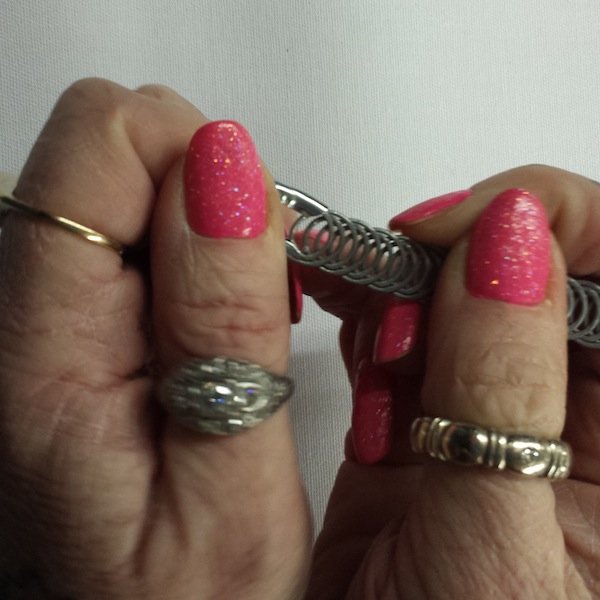
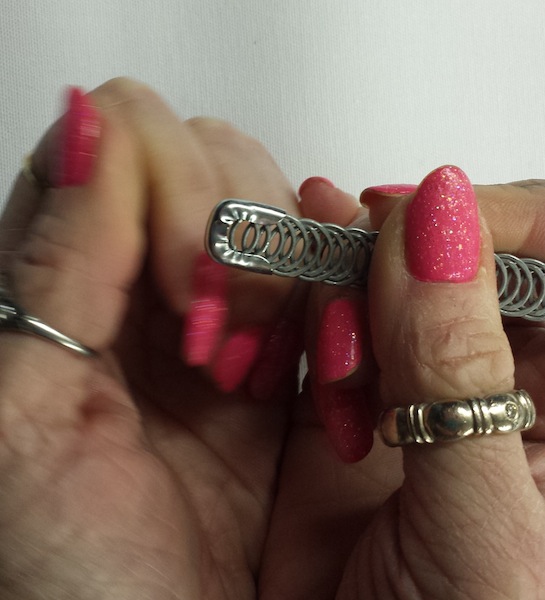
It’s easy to do with needle nose pliers. Start by crimping each of the sides partially closed. If you squeeze too much, use a flat head screwdriver to wedge it open a bit. (You probably have that screwdriver handy to change needles in your sewing machine.)
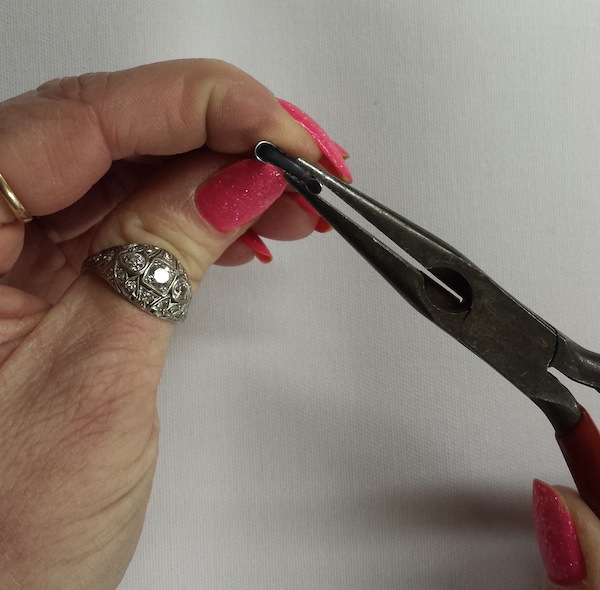
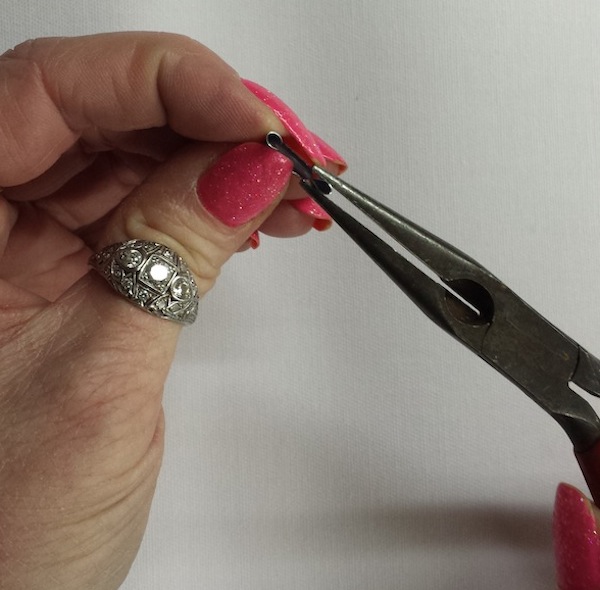
Next, squeeze the two sides together. I always squeeze them, and then test them for fit. If they are closed a “smidge” smaller than the width of the boning it may be more difficult to get onto the boning, but will stay on nice and tight. You can always use the pliers in the opposite manner and pry the sides out a bit. Put the closed pliers in the gap and pull open.
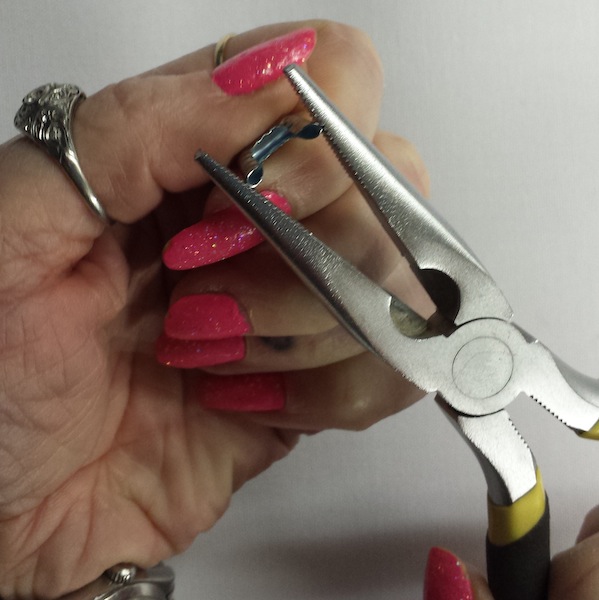
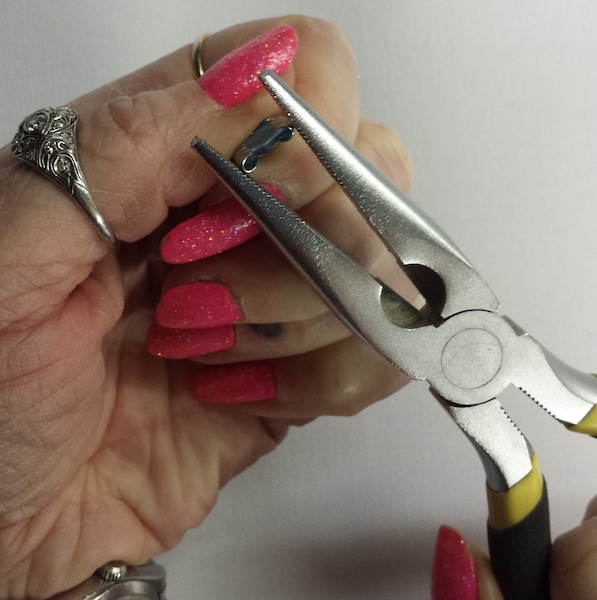
When you put the tip onto the end of the boning it should be tight. Work from one side to the other and cram it on. You can crimp it more after it’s on, but if it’s tight you won’t need to. Lay the piece of boning onto the outside of your corset over the channel it will go into before inserting. It’s easier to adjust the boning now, than try to pull it back out with the tip still on.
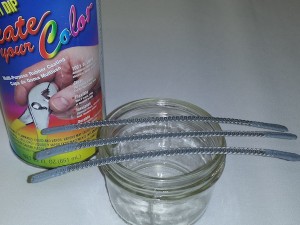
You can also use bone tipping fluid on your cut boning ends. You will need to dip the ends and balance them on something so they don’t stick to your work surface. Wait till they dry, and do it again to get a thorough coating.
Another tip: If your using hoop boning, put a drop or two of fabric or craft glue on the boning before you put the tip on, let it dry and it will be even more solid.
~Happy Corseting, Amy


I have been making corsets for many years for my daughter. We have had some problems with the tips coming off of the bones and I am glad to hear that there is something that I can dip the tips in to help bond them. Can you tell me the name of the product you used and where I can get it? My other problem is the cup on the corset. We have from under the bust and down just the way we want it but she is quite busty and we have had a big problem containing her bust without having “muffins” over the top of the cup. I would love to correspond with you if you had had this problem, know anyone who has or if you have any thoughts you could give me about this. Thanks for your help and look forward to hearing from you soon!
It’s called “tipping fluid” or “tool dip.” It can be purchased at the hardware store, usually near hand tools, and it’s intended use is to create a plastic cushion grip on hand tools like pliers and wire snippers… both tools I’m sure you have, so this is a win for when the rubber stuff on the handle starts to crack and peel as well as the ends of the bones.
Another product that may be useful is quick set epoxy… maybe not the best choice if you’re doing many bones at once, though. Loctite brand makes my personal fave, and it comes in a little yellow syringe hanging on a peg near the painter’s tape. It comes with a little “needle” tip, but don’t screw around with that– just mix it on a piece of tin foil with a toothpick and work very quickly. Just make sure you wash the ends of the bones with soap to get the greasy stuff off first, and dry them COMPLETELY before you glue.
Hi. I have delayed until I am absolutely sure my client really wants me to continue. And she does. So, my question: the hoop skirt making is short and actually has 2 hoops that are exactly the same . They are about 10? apart. The shape resembles 2 U’s attached. The skirt is not a circle. My concern is how will the hoop ends be attached? I am using buckram covered steel boning. What can be used to connect the ends?
She will remove the hoop wire for laundering the skirt. You only have 1/4″ and 1/2″ tips. I did not order them because the hoop wire is 3/8″. Will there be a need for the tips and if so, which would I need?
The 1/2″ tips are the correct size to cap the hoop boning. Because the cap is just a little bit wider this allows it to accommodate the boning. The fit of the cap is usually tight enough over the hoop boning that no additional crimping is necessary, however if you plan on taking the boning in and out of a casing you may want to crimp them a bit tighter to reduce the chance of the tips slipping.